


Join Santhigiri Institute of Management and experience value-based management education designed to build responsible leaders and successful professionals.
Welcome to Santhigiri Institute of Management
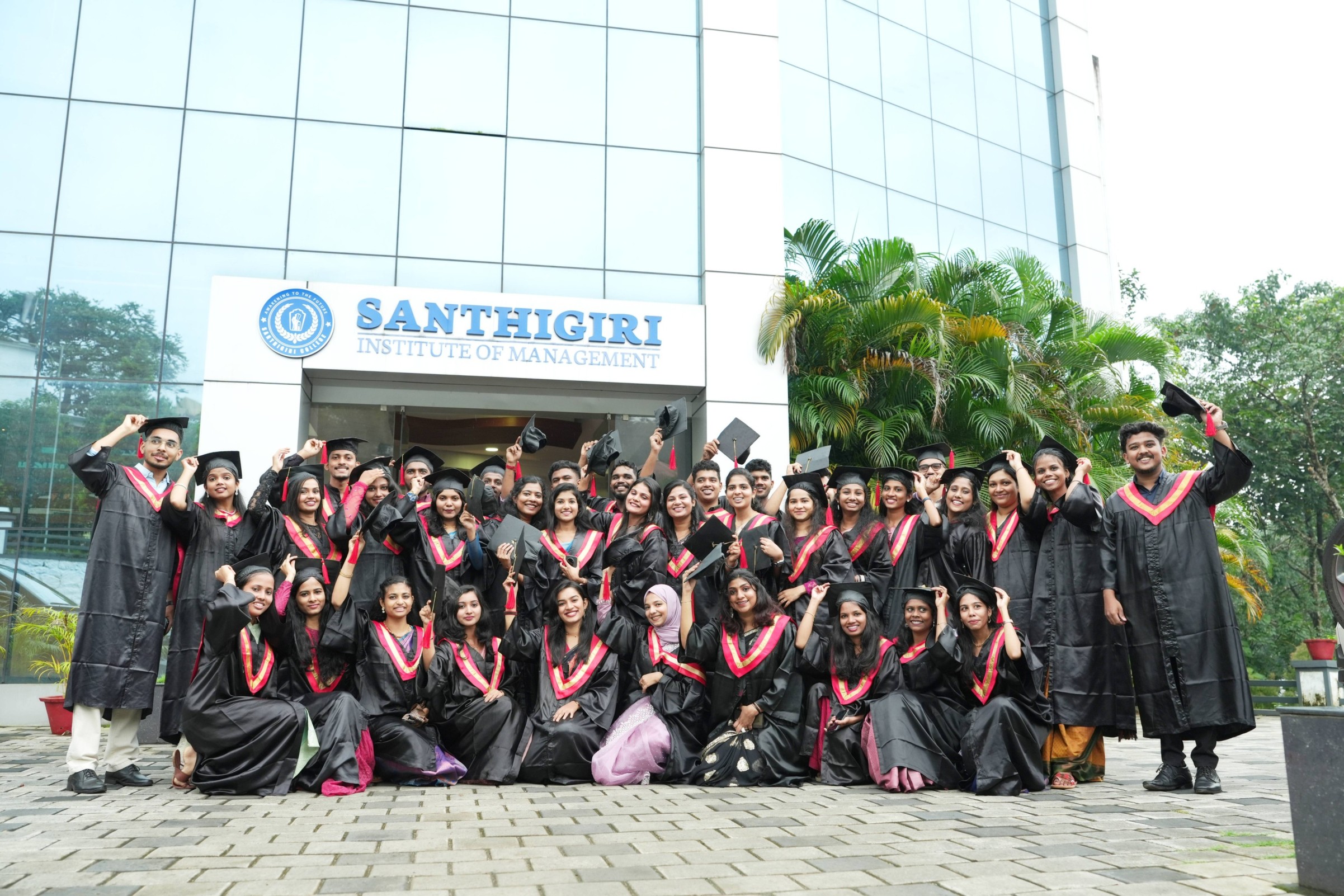
Santhigiri Institute of Management (SIM) is committed to advancing the transformative vision of the National Education Policy (NEP) by fostering an inclusive, learner-centric, and future-ready academic environment. In alignment with NEP guidelines, SIM integrates innovation, flexibility, and multidisciplinary learning into its curriculum and institutional practices. The institute actively promotes a culture of excellence where students are empowered with holistic competencies, ethical values, and leadership capabilities essential for succeeding in an evolving global ecosystem. Grounded in the legacy of the CMI Congregation’s commitment to education, SIM ensures that the principles of NEP—access, equity, quality, affordability, and accountability—are reflected across its academic delivery, governance, and student development initiatives. The institute consistently enhances its programmes, pedagogy, and institutional systems to prepare MBA graduates who are industry-ready, socially conscious, and capable of lifelong learning.
Curriculum structured to promote conceptual understanding, analytical skills, creativity, and real-world application.
Exposure to various interdisciplinary subjects through value-added courses, certificate programmes, and experiential learning components.
Well-defined Programme Outcomes (POs), Programme Specific Outcomes (PSOs), and Course Outcomes (COs) mapped to NEP standards.
Continuous assessments and feedback mechanisms ensure measurable learning outcomes and student progression.
Elective offerings and specializations designed to provide students with flexibility in choosing learning pathways aligned with their interests and career goals.
Integration of MOOCs, open learning platforms, and blended learning modes to broaden academic options.
Adoption of digital platforms, learning management systems, simulation tools, and ICT-supported pedagogy.
Smart classroom infrastructure facilitates interactive learning and enhances student engagement
Regular industry interactions through internships, live projects, industrial visits, and expert sessions.
Curriculum aligned with current industry trends, ensuring students are prepared for emerging market demands.
Encouragement for student and faculty research through research cells, conferences, and publications.
Support for entrepreneurial initiatives via incubation support, innovation workshops, and mentoring programmes.
Integration of ethics, social responsibility, and professional values into academic and co-curricular activities.
Community engagement initiatives aligned with NEP’s focus on creating socially responsible citizens.
Structured skill development programmes including soft skills, aptitude training, communication development, and placement readiness initiatives.
Collaboration with industry partners for training certifications and capacity-building programmes.
Mentoring systems, counseling support, and personalized attention to ensure holistic student well-being.
Equal opportunities and support services for diverse learners.
Internal Quality Assurance Cell (IQAC) actively monitors NEP-linked reforms and institutional performance.
Regular reviews, audits, and feedback-driven enhancements strengthen academic and administrative processes..